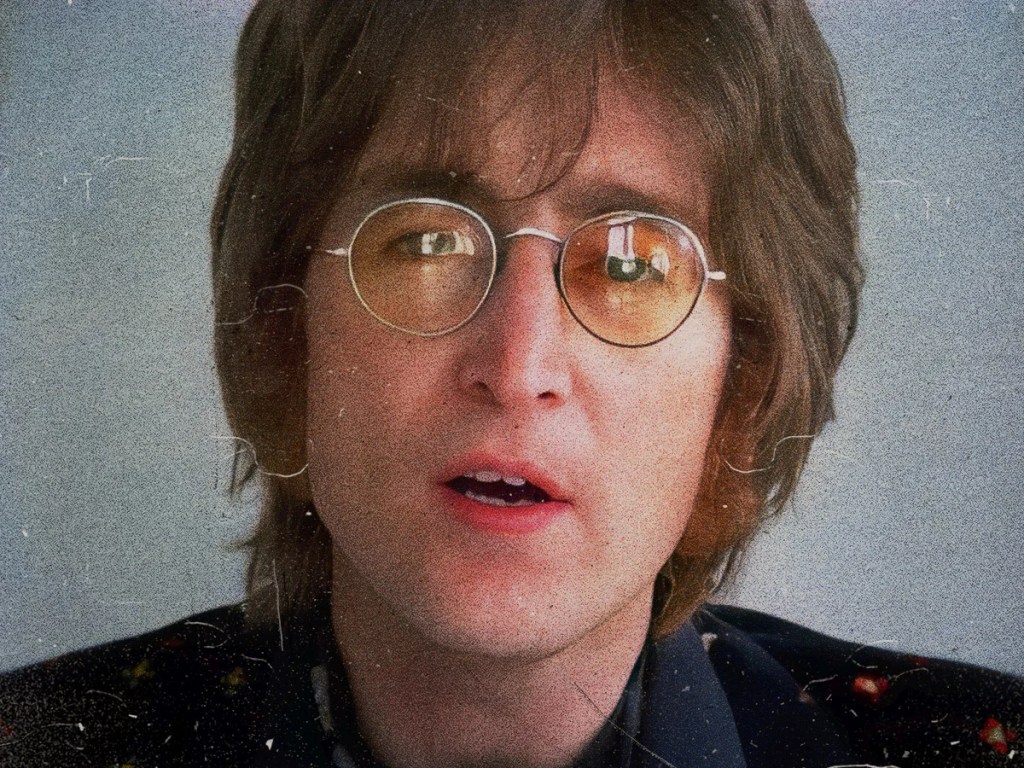
If you know me at all, you know that I’m a huge music lover. I will listen to pretty much anything, but I always come back to the Beatles. My brother’s childhood bedroom was directly above mine and I could always hear what he was listening to. More often than not, it was one of his Beatles albums.
Eventually, he started to collect John Lennon’s solo albums and I remember sitting in my room, taking it all in as if Lennon was letting me in on a secret. For me, his music was about so much more than the melodies or the epic Lennon–McCartney partnership. It invited me to sit with the feeling that a single voice could hold two completely different truths at the same time. Lennon was both a dreamer and a disruptor, and he lived in the tension between the two every day. And even now, decades later, working as a creative, I realize that tension is the exact place where good work comes from.
We still want to hope out loud
The song “Imagine” taught me the power of plainspoken truth. Lennon didn’t hide behind metaphors when he could aim directly for the heart. He wrote as if the emotional center of a message was the whole point, and not an afterthought.
That instinct has followed me throughout my career and is the part of copywriting that’s still magical to me: the moment when you realize you might actually make someone feel something. When the words aren’t just accurate, they’re human. But dreaming isn’t the whole story, and Lennon made sure we understood that.
But we also have to say the uncomfortable thing
The first time I heard “Revolution,” I remember squirming a little. When he wasn’t being hopeful and melodic, Lennon could be confrontational and abrasive. But there was always a purpose: shaking the listener awake, cutting through complacency, and challenging the script everyone else was repeating.
As a creative, that part hits just as hard. A lot of modern messaging, especially in healthcare, leans toward safe, polished, and expected. I think that the work that actually resonates has a little friction—it’s willing to poke at assumptions and won’t settle for the most polite version of the truth. The disruptor side of Lennon taught me not to get too comfortable with my own voice, so I dig deep to ask the harder question, write the sharper line, and steer clear of the easy cliché. Clarity is often born from a little creative discomfort.
Where those two selves meet
When you revisit Lennon’s work now, what strikes you isn’t just the idealism or just the rebellion, so much as how the two sharpen each other. The hope feels bolder because the honesty is so raw, and the honesty feels bearable because the hope refuses to die.
Creatively, that’s the space we’re all trying to find. The middle ground between the line that lifts and the line that jolts. It’s never one or the other. Instead, it’s both, held together with intention.
A small reminder
Monday was the anniversary of Lennon’s murder and it reminds me how quickly a voice can go silent and how much the work we leave behind really does matter. Lennon’s duality still pushes me to dream a little bigger, to choose honesty over comfort, and to care about how the words land. Mostly, it’s a nudge to keep making the work now, rather than “someday.”
 Sara Barton
Leave a comment