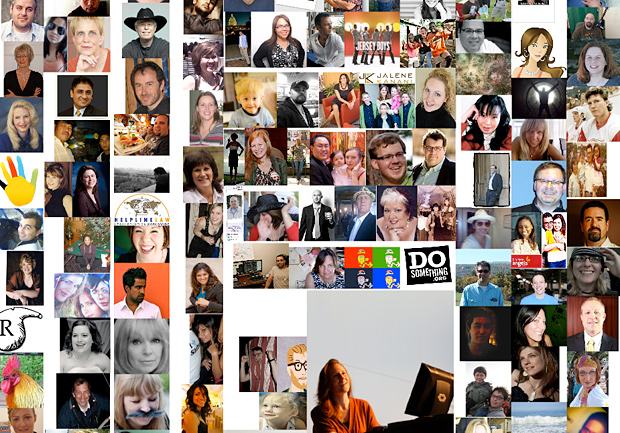
I’ve been following Fast Company’s Influence Project with great interest, primarily because I’m still trying to figure out exactly what it is they’re trying to accomplish. I get the whole point of using your social media influence to generate quantitative data that proves that people listen to what you say. However, this project leaves me scratching my head, despite their intentions of creating a viral campaign.
Never heard of the project? Here is how Fast Company explains it:
About the Project
We started with a simple question: Who are the most influential people online right now?
That’s what The Influence Project is designed to answer. By participating, you will have your picture appear in the November issue of Fast Company magazine as part of an amazing photo spread. The more influence you demonstrate, the bigger your picture will be.
You may discover that you’re more influential than you think.
Influence is not only about having the most friends or followers. Real influence is about being able to affect the behavior of those you interact with, to get others in your social network to act on a suggestion or recommendation. When you post a link or recommend a site, how many people actually bother to check it out? And what’s the likelihood of those people then forwarding it on? How far does your influence spread?
This is the type of influence we’re looking for. We want to find the most influential person online.
Who knows? It might even be you.
So how does this work? You constantly email and tweet your followers, as well as update your status, urging them to clink a specific link that contains your photo. Simple enough, right? I don’t know about you, but doesn’t this constitute spamming?
Fast Company considers being able to affect the behavior of those with whom you interact to be real influence. Last time I checked, influence was based on trust and deliberate connections, not spam and “noise.”
Here’s a thought, Fast Company, rather than urging people to exercise their influence by annoying their friends with pointless spam designed only to drive people to the Fast Company website, how about using it for something worthwhile, like raising awareness of an issue or encouraging people to “do good” on a local basis? To me, that’s what real influence is about.


 Sara Barton
Leave a reply to Eric Cancel reply