Clinical communications have to strike a careful balance. Include too much, and the message gets buried in data. Strip away too much, and you lose the substance that makes the story credible.
For Nepro, the challenge was to communicate the nutritional needs of patients on dialysis, establish the evidence supporting nutritional intervention, and connect that evidence to the role specialized nutrition could play in care.
The goal wasn’t simply to make the science easier. It was to make the science clearer.
Translating research into a clinical story
One of the pieces I developed was an Abbott Knowledge Ladder focused on a study evaluating oral nutritional supplementation and survival among patients receiving hemodialysis.
The original research included study methodology, patient characteristics, treatment information, and outcomes. My job was to distill that evidence into a concise HCP communication without losing the clinical significance of the findings.
The resulting piece gave healthcare professionals a way to quickly understand the study, its findings, and the potential implications of nutritional intervention for patients on dialysis.
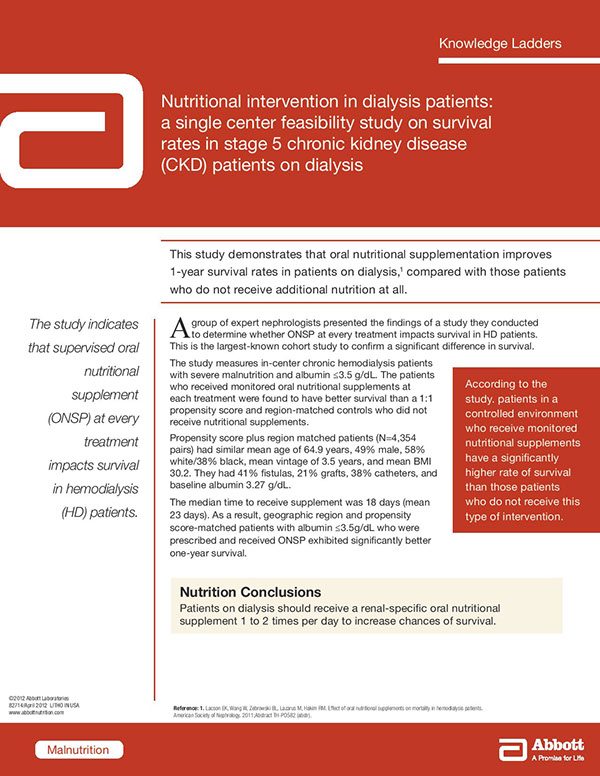
Clinical evidence translated into a concise HCP communication.
From individual evidence to a larger clinical narrative
A study can establish an important finding. A sales conversation has to connect that finding to a much larger story.
For the Nepro sales aid, I helped organize clinical evidence into a narrative that moved from the nutritional challenges facing patients with chronic kidney disease to the potential impact of nutritional intervention—and ultimately to the role of specialized nutrition.
The story established the unmet need first, then introduced supporting evidence and product information, helping representatives move through the clinical rationale in a logical progression.
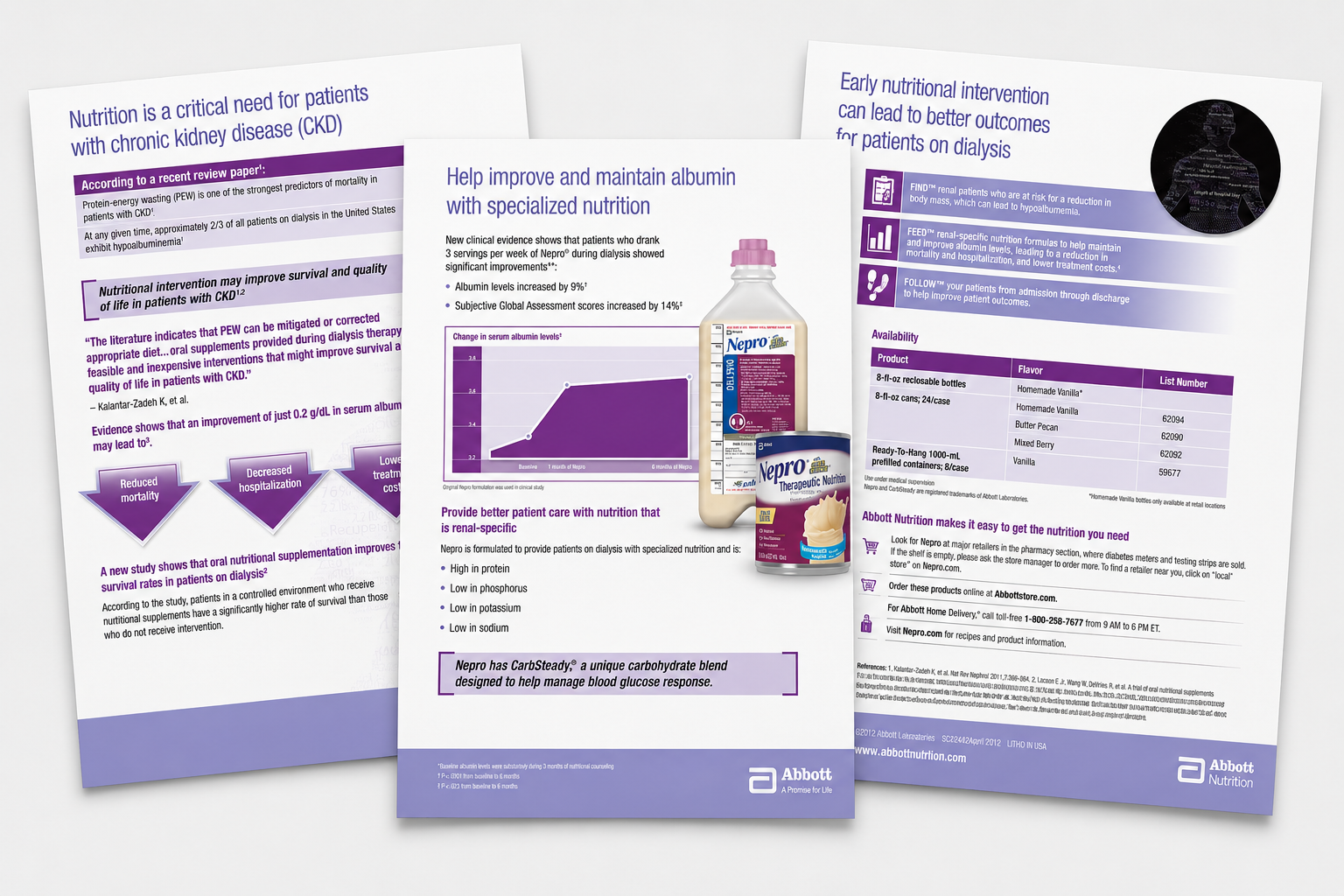
Connecting evidence to patient care
The clinical story wasn’t built around product claims in isolation. It connected nutritional status with outcomes relevant to healthcare professionals, including mortality, hospitalization and treatment costs, then moved into evidence around albumin levels and the role of renal-specific nutrition.
From there, the sales aid translated the story into a practical framework for identifying at-risk patients, providing nutritional intervention and following patients through care.
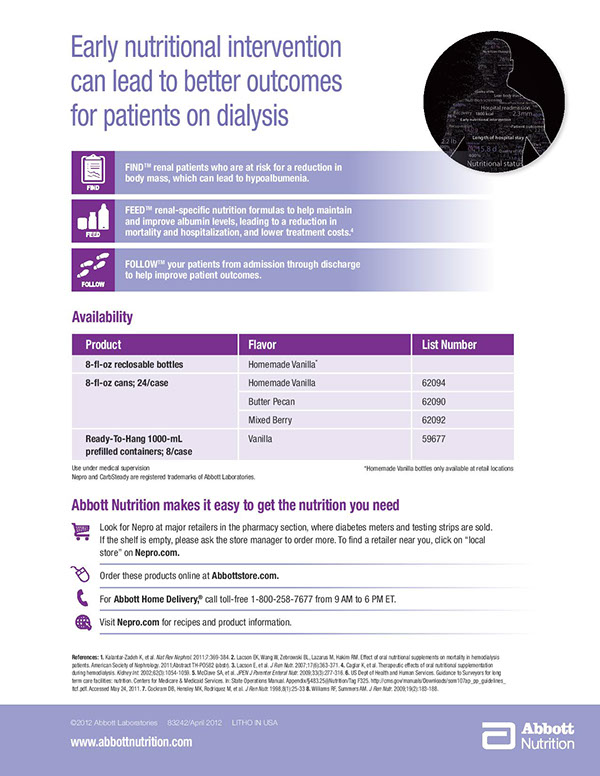
Building a story that could stand up to scrutiny
Every piece had to balance accessibility with scientific rigor. That meant working with clinical studies and references, understanding the significance of the findings, determining which information belonged in the main narrative and which belonged in supporting detail, and writing for an audience accustomed to evaluating evidence critically.
The result was communication that didn’t ask healthcare professionals to choose between clarity and substance.
The Result
The Nepro work transformed dense clinical evidence into communications built for real healthcare conversations—from understanding the implications of an individual study to seeing how nutritional intervention could fit into the broader care of patients on dialysis.
It required scientific literacy, editorial judgment, and the ability to find the story inside the evidence. Because making complex science understandable doesn’t mean making it simplistic.


Leave a comment