Cancer treatment can make something as fundamental as eating unexpectedly difficult. Side effects such as taste changes, mouth sores, nausea, and loss of appetite can make it harder for patients to get the nutrition they need at a time when maintaining weight and strength is especially important.
Abbott Nutrition needed resources that could help healthcare professionals identify patients who may need nutritional support—and give patients practical information they could use throughout treatment.
I helped develop an integrated system of HCP and patient communications designed to make nutrition a more actionable part of the cancer-treatment conversation.
My role
Copywriting • patient education • HCP communications • clinical content translation • concept development
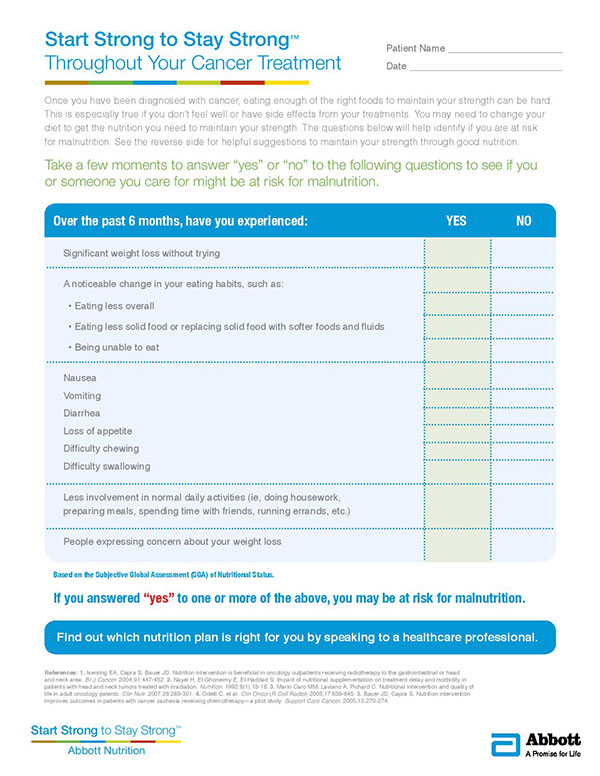
Identifying nutritional risk
One part of the program focused on helping healthcare professionals recognize when patients might be at risk for malnutrition.
The Start Strong to Stay Strong assessment translated clinical nutritional-risk criteria into a simple patient screening tool, helping identify changes in weight, appetite, eating habits, symptoms, and daily activity that could signal the need for additional nutritional support.
Making treatment side effects easier to manage
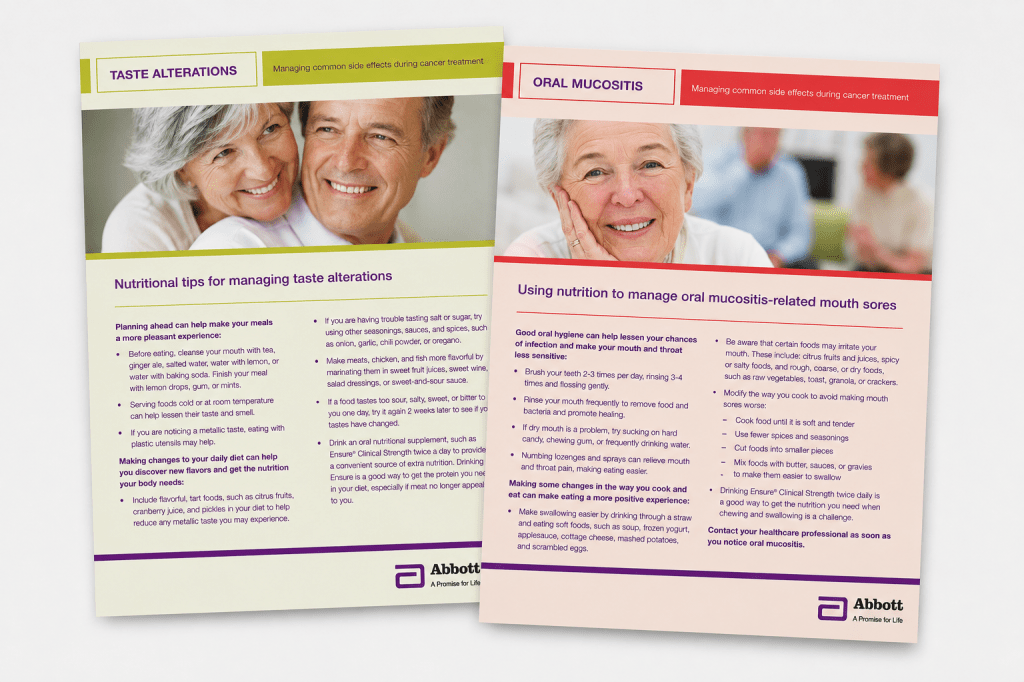
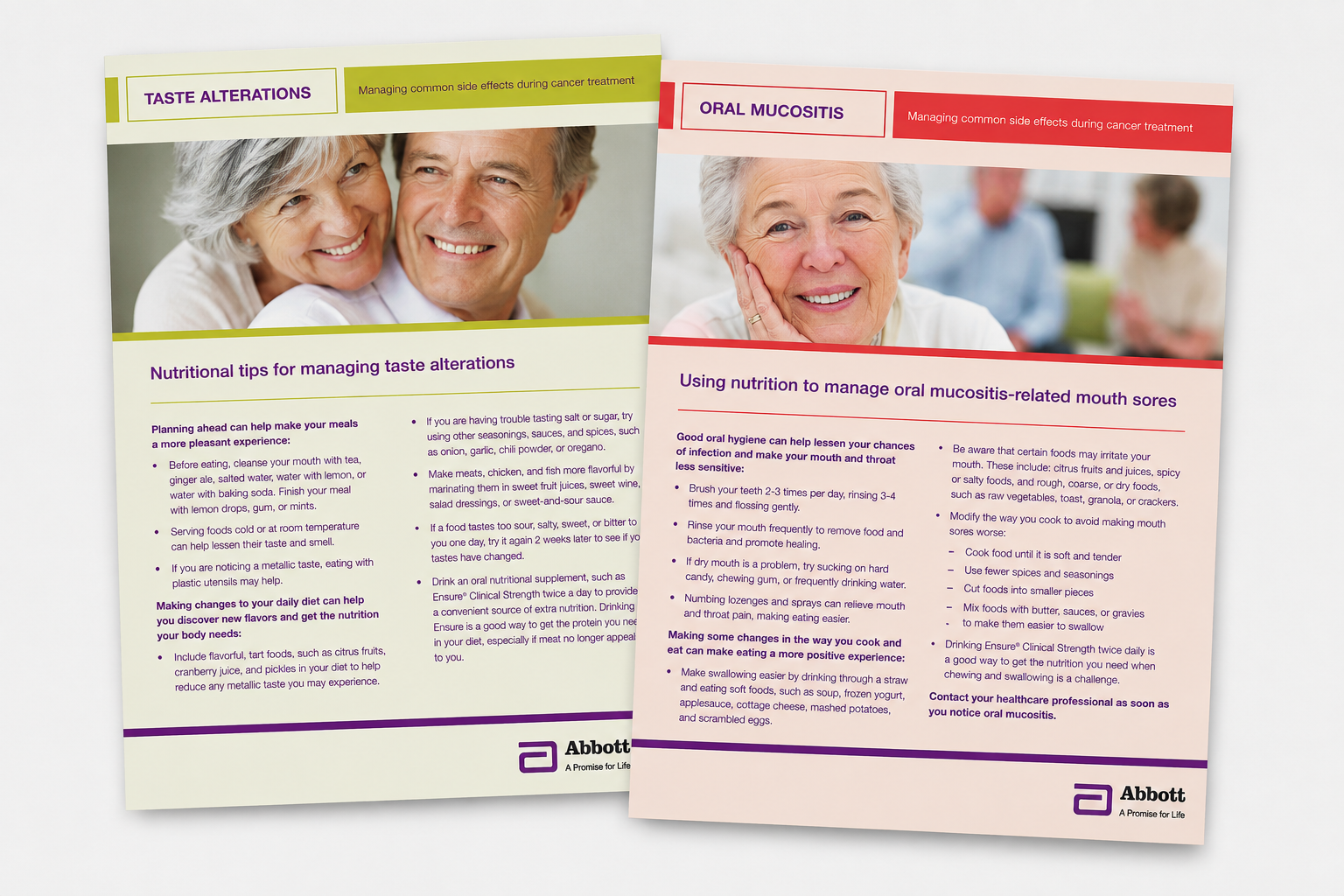
Cancer treatment can affect nutrition in very specific ways. Patient education materials addressed common challenges such as oral mucositis and taste alterations, translating the clinical issue into practical guidance patients could use when choosing, preparing, and eating food.
Rather than simply explaining the side effect, the materials focused on the question patients actually needed answered: What can I do differently when eating becomes difficult?
Connecting education to individualized support
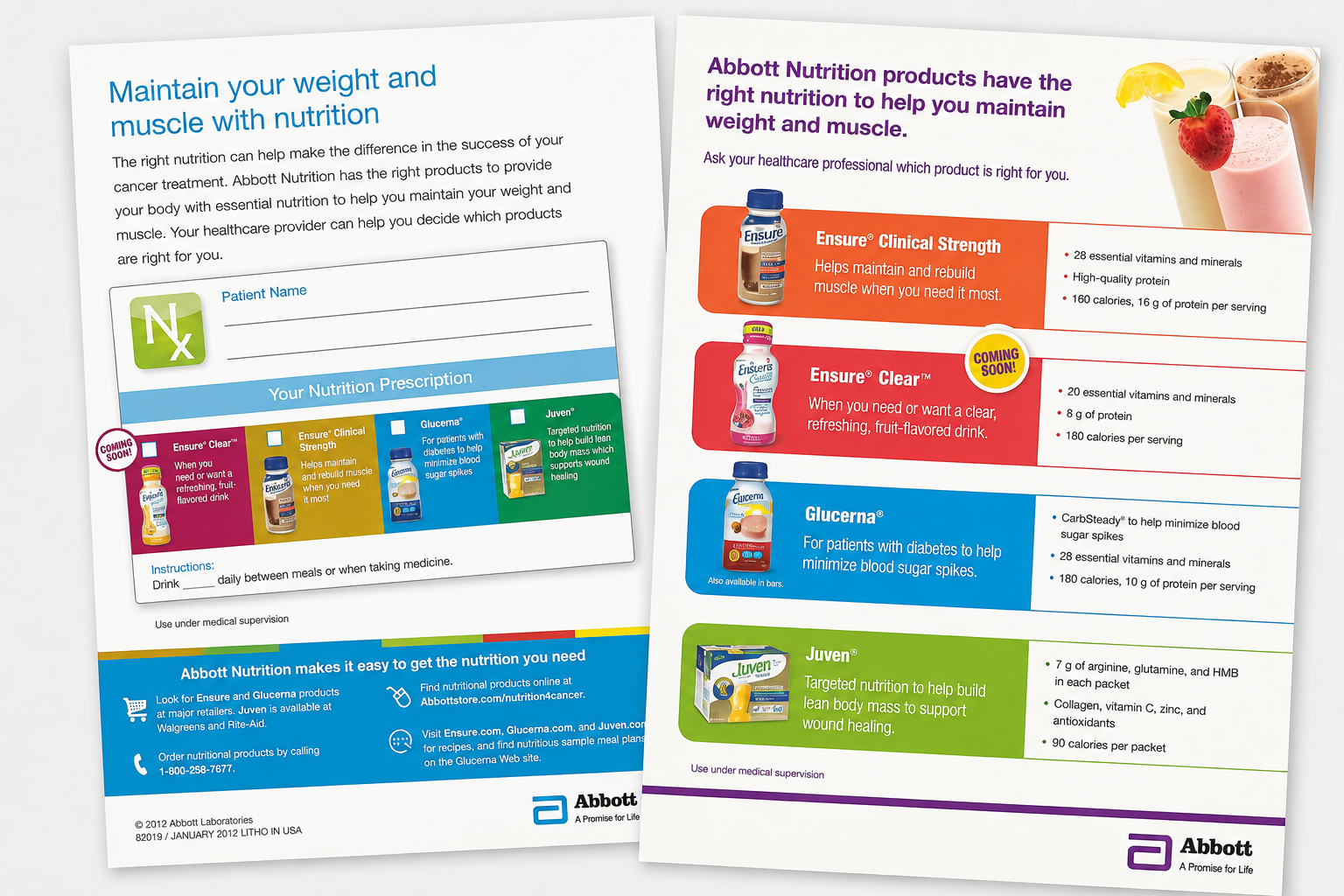
The communications also gave healthcare professionals a way to turn nutritional guidance into a concrete recommendation.
Nutrition Prescription helped connect individual patient needs with appropriate Abbott Nutrition products, creating a bridge between the treatment conversation and nutritional support at home.
Turning guidance into something patients could actually use
Patient support extended beyond clinical education.
The Nutrition Counts cookbook offered recipes and meal ideas designed around some of the eating challenges patients could experience during treatment. Instead of stopping at “nutrition is important,” the resource helped patients figure out what eating well might actually look like when their appetite, taste, or ability to eat had changed.

Extending the conversation to HCPs
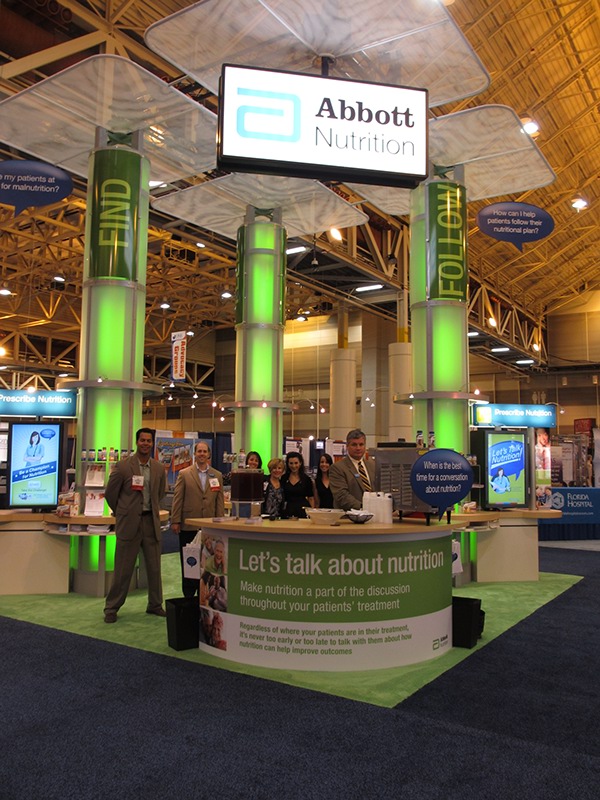
The broader program also came to life in an Abbott Nutrition oncology trade-show presence, encouraging healthcare professionals to make nutrition part of the conversation throughout treatment.
The result
The work created a connected system of communications around nutrition during cancer treatment—from identifying nutritional risk and supporting HCP recommendations to helping patients manage treatment-related eating challenges in everyday life.
Across clinical tools, patient education, practical resources, and professional communications, the goal remained consistent: make complex nutritional guidance easier to understand—and easier to act on.


Leave a comment